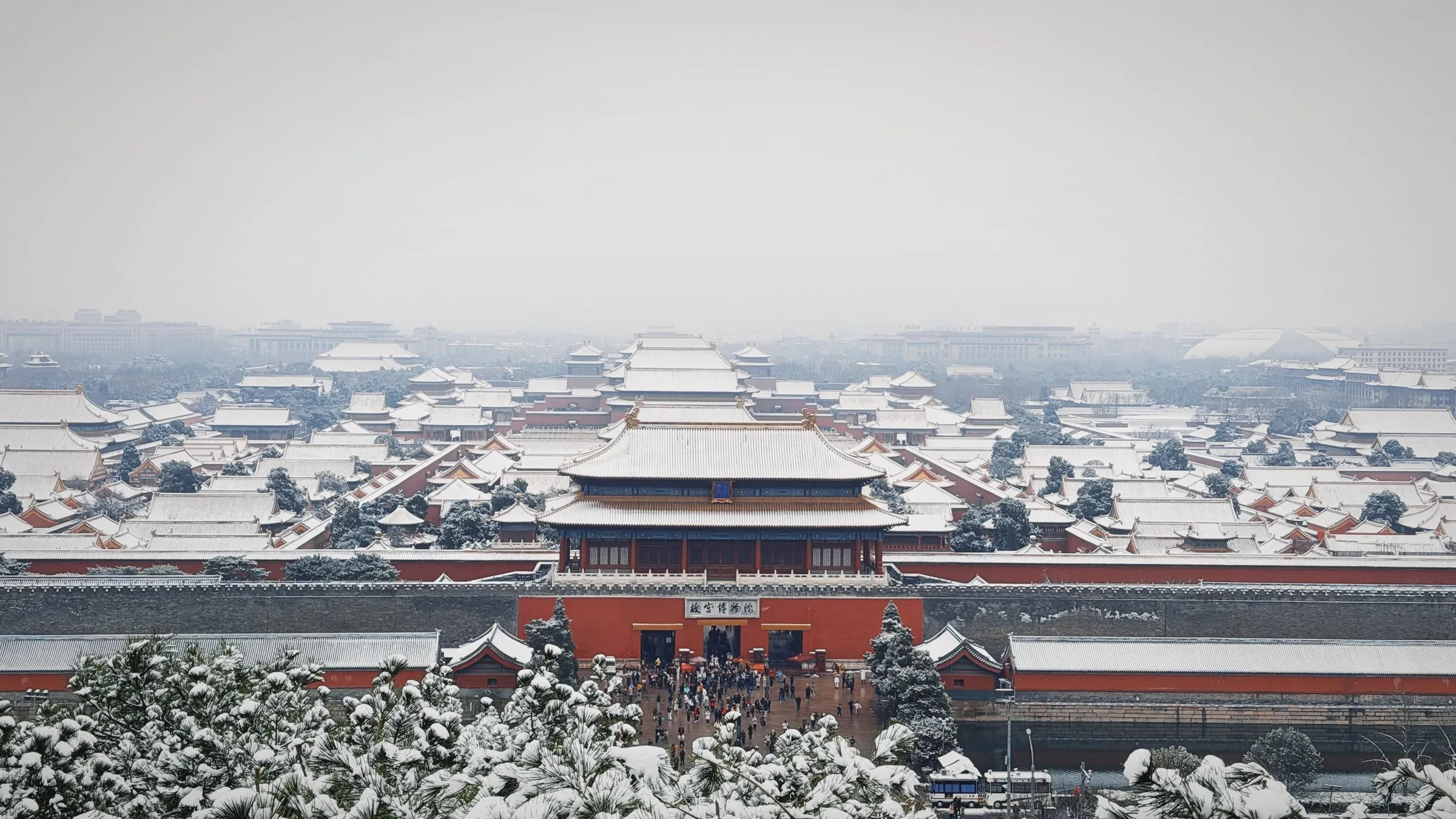
The best time to visit Beijing is mid-September through October, with April and May a close second. Autumn brings clear, mild days, with October highs around 19 °C (67 °F) and little rain, while spring is the sunniest season. July and August are hot and wet, and winter is cold, dry and quiet. Plan around China’s holiday weeks.
- Best months: mid-September to October, then April to May
- Hottest and wettest: July, average high 31.8 °C (89 °F) and about 170 mm (6.7 in) of rain
- Coldest: January, average low −6.9 °C (20 °F), and very dry
- Autumn color: golden ginkgo and red hills from late October into early November
- Holidays to plan around: Spring Festival, May Day and the 1–7 October National Day week
Beijing weather by month
These are long-term averages for 1991–2020 from the China Meteorological Administration, for the Beijing weather station. Rain means average total precipitation for the month.
| Month | Avg high | Avg low | Rain |
|---|---|---|---|
| January | 2.3 °C / 36 °F | −6.9 °C / 20 °F | 2.2 mm / 0.09 in |
| February | 6.1 °C / 43 °F | −4.2 °C / 24 °F | 5.8 mm / 0.23 in |
| March | 13.2 °C / 56 °F | 1.9 °C / 35 °F | 8.6 mm / 0.34 in |
| April | 21.0 °C / 70 °F | 9.0 °C / 48 °F | 21.7 mm / 0.85 in |
| May | 27.2 °C / 81 °F | 15.1 °C / 59 °F | 36.1 mm / 1.42 in |
| June | 30.8 °C / 87 °F | 20.0 °C / 68 °F | 72.4 mm / 2.85 in |
| July | 31.8 °C / 89 °F | 23.0 °C / 73 °F | 169.7 mm / 6.68 in |
| August | 30.7 °C / 87 °F | 22.0 °C / 72 °F | 113.4 mm / 4.46 in |
| September | 26.5 °C / 80 °F | 16.3 °C / 61 °F | 53.7 mm / 2.11 in |
| October | 19.3 °C / 67 °F | 8.8 °C / 48 °F | 28.7 mm / 1.13 in |
| November | 10.3 °C / 51 °F | 0.7 °C / 33 °F | 13.5 mm / 0.53 in |
| December | 3.7 °C / 39 °F | −5.0 °C / 23 °F | 2.2 mm / 0.09 in |
Beijing gets about 528 mm (21 in) of rain and snow in a year, and July and August together bring more than half of it. From December to April the air is dry, with relative humidity in the 40s; in July and August it climbs to around 70.
Beijing by season
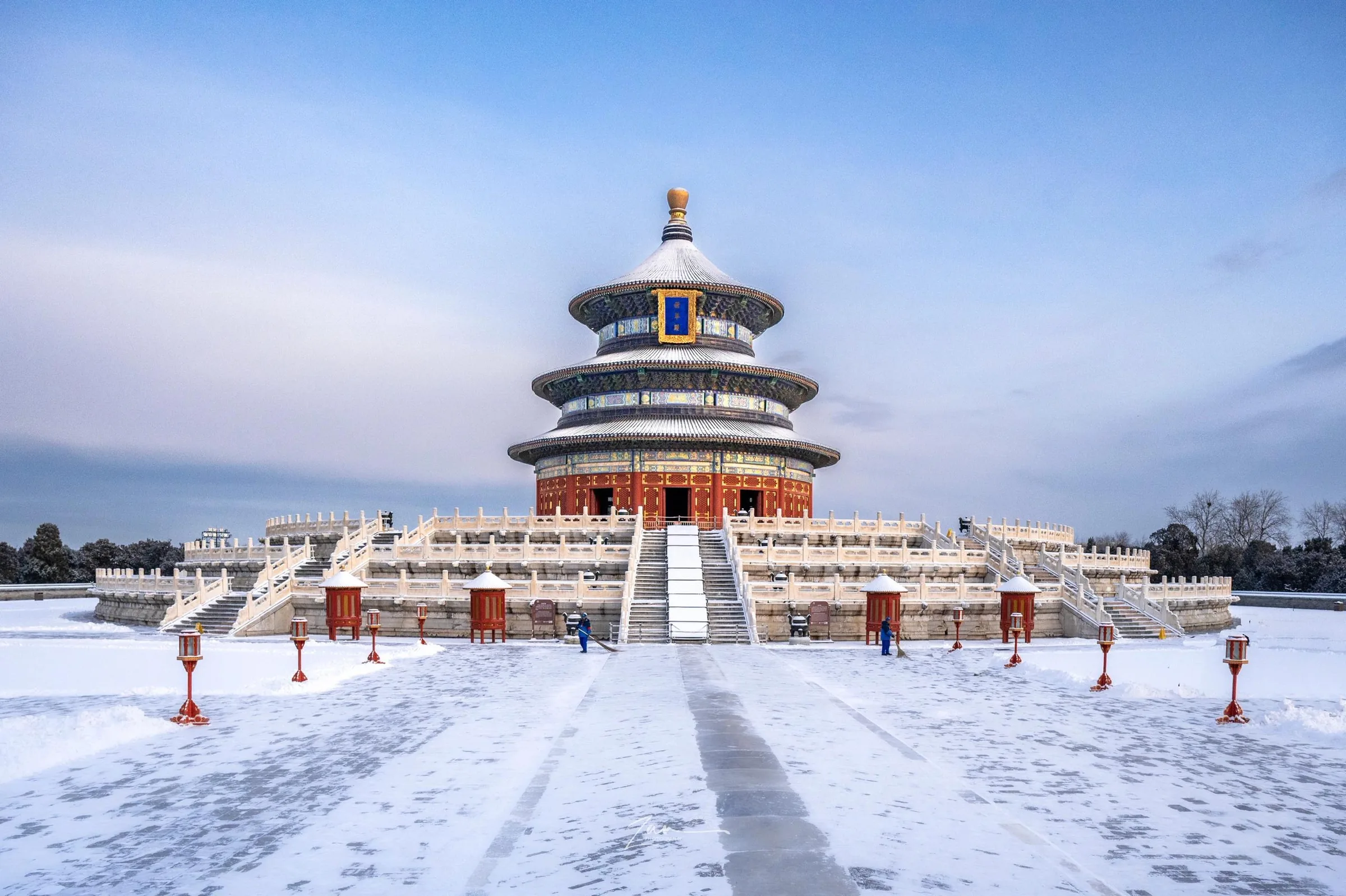
Autumn (mid-September to early November): our first choice
September still feels like late summer, with highs around 26.5 °C (80 °F), and by October the city settles into mostly dry, mild days that suit long walks along the Forbidden City’s walls and an easy climb on the Great Wall. Pack a light jacket: October nights average 8.8 °C (48 °F).
Autumn color peaks in late October and early November. On 27 October 2026, Beijing’s official tourism portal reported the city’s ginkgo avenues at their best in Ditan Park, Zhongshan Park, the Old Summer Palace (Yuanmingyuan) and Olympic Forest Park, where golden leaves drift down around the Olympic Tower. Out at Mutianyu, the scenic area announced on 2 November 2026 that the red-leaf season had peaked, with Mongolian oak coloring the hills on both sides of the wall. Travelers’ photos from 3 November 2026 showed many city ginkgos still turning, so the gold can last into the second week of November, until a windy day strips the trees. Leaf-viewing weekends keep the parks and palaces busy, so plan the Forbidden City and the big parks for weekday mornings. Our Great Wall guide compares the sections if you want to plan a day around the leaves.
The one week to plan around is National Day, 1–7 October in 2026, when much of China is on holiday. Either arrive after the 7th, or spend the holiday in parks, hutongs and restaurants and save the Forbidden City and the Great Wall for the week after.
Spring (April and May): the sunniest months
Spring is Beijing’s sunniest season. May averages about 265 hours of sunshine and April about 243, the two highest totals of the year. April days reach around 21 °C (70 °F) and May around 27 °C (81 °F), pleasant weather for parks, palace gardens and the Great Wall. Mornings are cool in April, with lows near 9 °C (48 °F), so layers work best.
Spring can be windy, with the occasional dusty day, mostly in March and April. Two short holidays fall here: Qingming (4–6 April 2026) and May Day (1–5 May 2026). During the May Day break, keep to easy city days and put the Forbidden City and the Great Wall before or after it.
Tell us your dates, group size and what you would like to see. We reply with a day-by-day plan and a written quote.
Summer (June to August): green, hot and humid
Summer is the warmest and wettest stretch of the year. July averages a high of 31.8 °C (89 °F), about 170 mm (6.7 in) of rain and around 12 days with rain. It is also the cloudiest month. The Dragon Boat Festival break fell on 19–21 June in 2026.
If school holidays leave you only summer, build the day around the heat. Start the Great Wall early in the morning, keep the middle of the day for shaded courtyards, museums or a long lunch, and save outdoor walks for late afternoon. In July, a car between sights keeps your time walking in the heat short.
Winter (November to March): cold, dry and calm
Once the autumn leaves have fallen in mid-November, winter is the quiet season. January is the coldest month, with an average high of 2.3 °C (36 °F) and a low of −6.9 °C (20 °F), and December and January each see only about 2 mm of precipitation. Light snow falls on a couple of days a month from December to February, and if it snows during your trip, go and see the snow on the Forbidden City’s yellow roofs.
Dress warmly in layers, with a hat and gloves for the Great Wall. Street-side tanghulu, hawthorn berries in a glassy sugar shell, are at their best now, because the cold sets the shell crisp. Mutianyu keeps shorter low-season hours from 16 November to 15 March, 8:00am to 5:30pm as of November 2026, which still leaves plenty of time for a morning visit. At the Summer Palace, the boats on Kunming Lake stop for the winter in early November (on 2 November in 2026) and usually return in spring after the ice melts.
The big holiday is Spring Festival (Chinese New Year). In 2026 the break ran for nine days, 15–23 February, with Lunar New Year’s Day on 17 February.
A note on air quality
Average fine-particle (PM2.5) levels in Beijing fell to 27 µg/m³ in 2025, about 70 percent lower than in 2013.
China’s public holidays to plan around
China creates long breaks by moving weekend days, so some Saturdays and Sundays become normal working days, and museums and sights are at their busiest during the breaks themselves. These are the official 2026 dates from the State Council:
| Holiday | 2026 dates | Length |
|---|---|---|
| New Year | 1–3 January | 3 days |
| Spring Festival | 15–23 February | 9 days |
| Qingming | 4–6 April | 3 days |
| May Day | 1–5 May | 5 days |
| Dragon Boat | 19–21 June | 3 days |
| Mid-Autumn | 25–27 September | 3 days |
| National Day | 1–7 October | 7 days |
The government announces each year’s holiday schedule late in the year before; the 2026 notice was issued on 4 November 2025. The 2027 dates had not been published as of 5 November 2026. If you are planning a 2027 trip now, tell us your rough dates and we’ll check them against the schedule as soon as it is out.
The best time for your group
- First visit as a couple: mid-September to October, for mild, mostly dry days.
- Grandparents and older travelers: April to May or September to October, when walking is comfortable. Our guide to Beijing for seniors and families has more on pacing.
- Families with school-age children: summer works with early starts and shaded afternoons.
- Photographers: late October to early November for ginkgo gold and red hills at the Great Wall.
- Quiet sightseeing: mid-November to March, outside the Spring Festival week.
Once you have a month in mind, see how many days to spend in Beijing, browse our private Beijing tours, or start with the city’s highlights in things to do in Beijing.
Tell us your dates, group size and what you would like to see. We reply with a day-by-day plan and a written quote.
Frequently asked questions
What is the best month to visit Beijing?
October is the best single month for most travelers. Average highs are about 19 °C (67 °F), rain is light, and days are mostly clear. Plan around the National Day holiday on 1–7 October, or arrive just after it.
Is Beijing too hot in summer?
It's hot and humid, but you can plan around it. July averages a high of 31.8 °C (89 °F) and is the wettest month. Start sightseeing early, keep midday for indoor or shaded sights, and travel between stops by car.
How cold is Beijing in winter?
January is the coldest month, with an average high of 2.3 °C (36 °F) and a low of −6.9 °C (20 °F). Winter is also very dry, with only a couple of light snowfalls a month from December to February. Warm layers, a hat and gloves are enough.
When do the leaves change color in Beijing?
Late October to early November. In 2026 the city's ginkgo avenues were reported at their best on 27 October in Ditan Park, Zhongshan Park, Yuanmingyuan and Olympic Forest Park, and Mutianyu announced its red-leaf peak on 2 November.
Which Chinese holidays should I plan around?
The big ones are Spring Festival (15–23 February in 2026), May Day (1–5 May) and National Day (1–7 October). Sights are busiest during these breaks, so schedule the Forbidden City and Great Wall on the days before or after.
What are the 2027 holiday dates in China?
The 2027 schedule had not been published as of 5 November 2026. China's government announces each year's dates late in the previous year; the 2026 notice came out on 4 November 2025. We will update this page once the 2027 dates are official.
What is the air quality like in Beijing?
Much better than it used to be. Average fine-particle (PM2.5) levels fell to 27 µg/m³ in 2025, about 70 percent lower than in 2013, and 2025 had the most good-air days on record.
Facts checked: 5 November 2026. Ticket prices, opening hours and entry rules can change; we re-check before every booking.