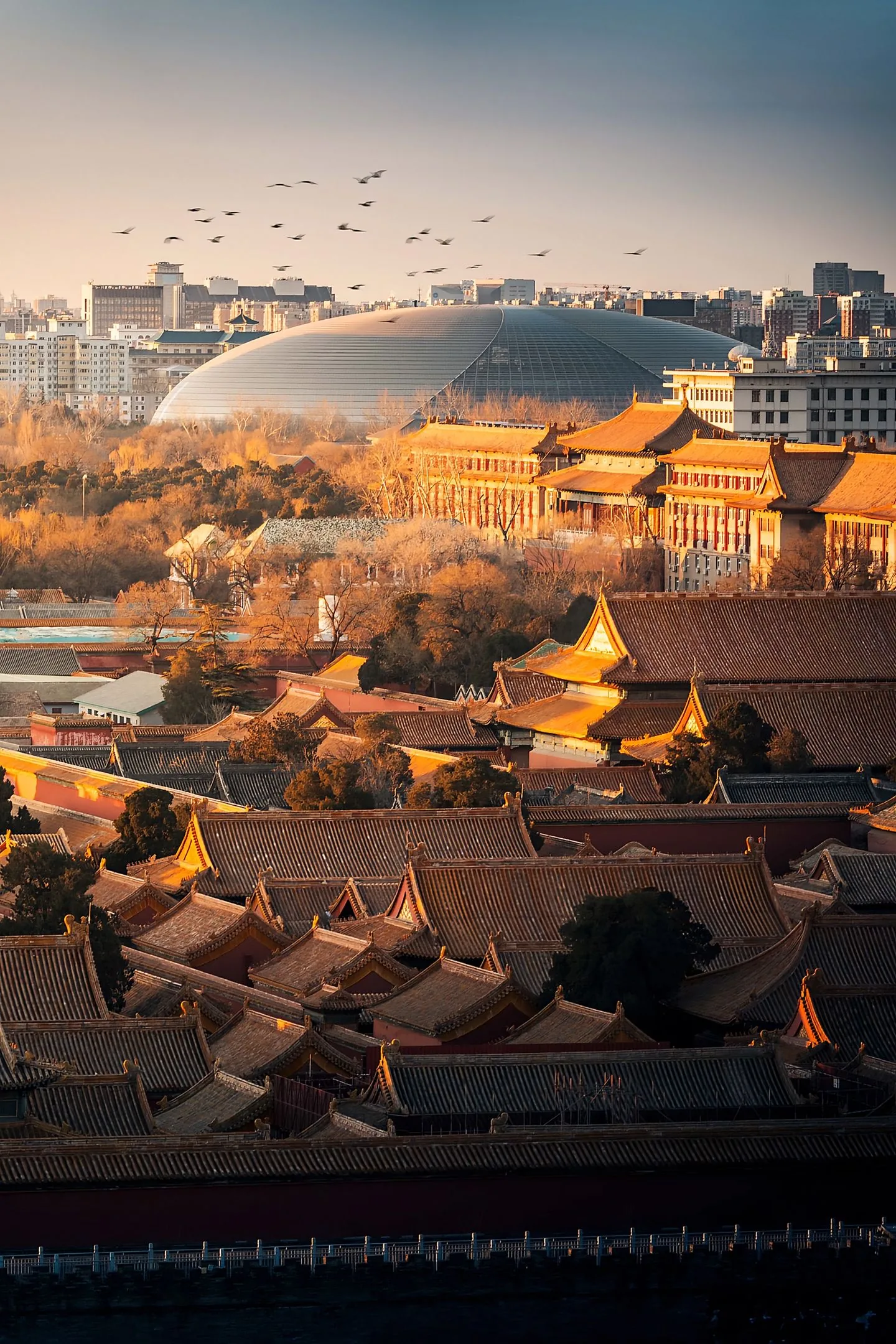
Jingshan Park is the wooded hill directly north of the Forbidden City, and the short climb to Wanchun Pavilion at its summit gives the classic view over the palace’s golden roofs. The walk up takes about 15 minutes, entry is CNY 2 as of November 2026, and Beihai Park, with its lake and White Dagoba, lies just to the west.
- Tickets: Jingshan CNY 2 (CNY 10 during flower exhibitions); Beihai from a few yuan (as of November 2026)
- Opening hours: both parks November–March 6:30–20:00, April–October 6:00–21:00
- Booking: online up to 7 days ahead, or buy at the gate
- Time to the top of Jingshan: about 15 minutes on foot
- Getting there: Jingshan faces the Forbidden City’s north exit; Beihai North station (Line 6) for Beihai
The view from Wanchun Pavilion
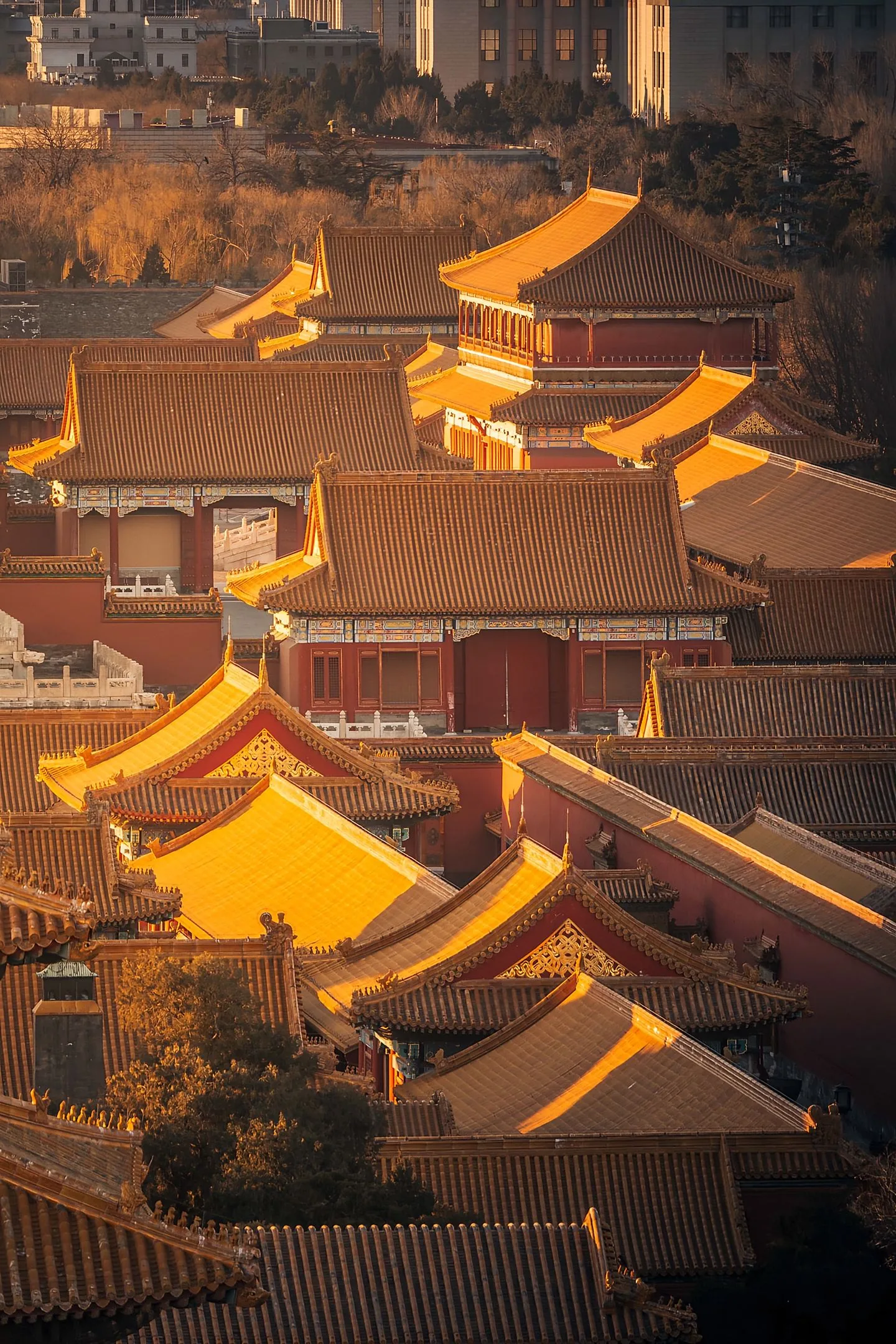
Walk out of the Forbidden City through the Gate of Divine Prowess, cross the street, and you are at the foot of Jingshan. Paths wind up through old pines and cypresses to Wanchun Pavilion, the Pavilion of Everlasting Spring, which stands at the highest point on Beijing’s central axis. From the top, the palace lies below you, row after row of yellow-glazed roofs running south toward Tiananmen. Turn west and the White Dagoba of Beihai rises above the trees; turn north and the axis carries on toward the Drum and Bell Towers.
It is the one place in the city where the scale of the Forbidden City makes sense. Inside, you see courtyards and halls one at a time. From Jingshan you see the whole design, 961 meters from south to north, laid out like a plan on a table. On a dry, clear winter or autumn day you can see well past the palace walls. Travelers report that the summit pavilion is busiest around sunset, especially at weekends, and much quieter in the morning and on weekdays.
You don’t need to be a hiker. Several paths lead up. Travelers report that the shortest, from the west gate, takes about five minutes but is steps all the way, while the main path from the south gate rises more gently, so grandparents and young children can take it slowly.
Jingshan Park: tickets, hours and booking
As of November 2026, entry costs CNY 2. During exhibition periods, such as the peony show, it rises to CNY 10 (about US$1.50). Children under 1.2 m enter free. Visitors 60 and over from outside Beijing, including foreign visitors, exchange their ID or passport for a ticket at the entrance, so bring your passport.
From November to March the park opens 6:30–20:00, with the last entry at 19:30. From April to October it opens 6:00–21:00, with the last entry at 20:30. You can book a timed ticket up to 7 days ahead through the “畅游公园” (Visiting Beijing Parks) WeChat account, then show the QR code and your passport at the gate, or simply buy at the entrance.
Mondays: the park is open every day. Shouhuang Hall, the walled hall complex behind the hill, is normally closed on Mondays outside the summer opening period, so plan it for another day if you want to see inside.
Tell us your dates, group size and what you would like to see. We reply with a day-by-day plan and a written quote.
Beihai Park: the imperial lake garden next door
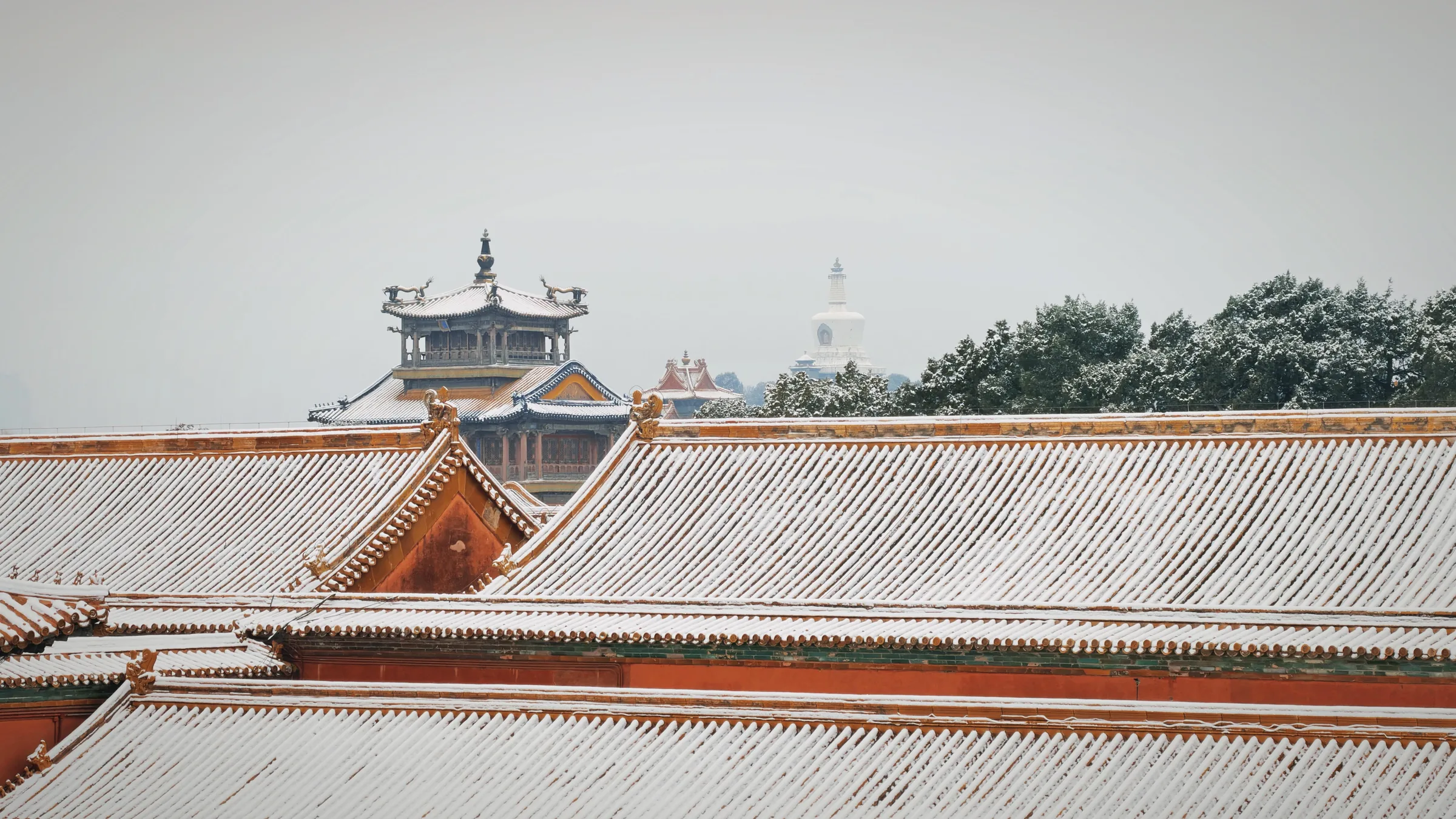
Beihai was an imperial garden from the Jin dynasty through the Qing, long before it opened as a public park. Of its 68.2 hectares, 38.9 are water, and it follows the classical “one lake, three hills” design of Chinese garden-making. The centerpiece is Qionghua Island, crowned by the White Dagoba, a Tibetan-style stupa you can see from Jingshan’s summit. Walk the lakeshore and you’ll find the Nine-Dragon Screen, glazed tiles with dragons twisting through clouds, and Jingxin Studio, a small garden of rockeries, pavilions and ponds.
In late autumn the light turns gold over the water, and on winter mornings the lake is still and quiet.
Beihai tickets and hours (as of November 2026)
| Ticket | April–October | November–March |
|---|---|---|
| Entrance | CNY 10 (about US$1.50) | A few yuan |
| Combination ticket | CNY 20 (about US$3) | CNY 15 (about US$2) |
Concession tickets are half price. Opening hours match Jingshan: 6:30–20:00 from November to March, 6:00–21:00 from April to October. Tickets can be booked up to 7 days ahead online, and the ticket offices sell them too. Visitors 60 and over often get free or reduced entry to Beijing’s city parks; bring your passport and ask at the gate.
Mondays and current closures: the park is open daily, but the Yong’an Temple courtyards on Qionghua Island are normally closed on Mondays outside the summer opening period. As of a notice dated 16 October 2026, the Wanfo Lou ruins and the Chanfu Temple area are temporarily closed. We check the park’s notices before your day.
Walking from the palace to Jingshan, Beihai and Shichahai
The walk runs south to north:
- Forbidden City: enter at the Meridian Gate and walk north through the palace. Our Forbidden City guide covers tickets and routes.
- Jingshan: exit at the Gate of Divine Prowess, cross to Jingshan and climb to Wanchun Pavilion for the view back over the palace.
- Beihai: come down the west side of the hill and walk west to Beihai for a stroll around Qionghua Island.
- Shichahai: continue north to the lakes of Shichahai and Houhai, where the hutongs begin. See our guide to Beijing’s hutongs.
With a lunch break, that is a full day on foot. For a shorter day, stop after Jingshan. Its gate is across the street from the palace’s north exit, and the climb takes about 15 minutes.
A practical note on transport: the Forbidden City has no car park of its own, and the nearest public car park, on Jingshan Houjie, has limited spaces. On a private tour your driver drops you at the start, then meets you again at the end of the walk, wherever that turns out to be. By public transport, Line 6 to Beihai North station serves Beihai’s north side, and buses 111, 124 and 58 stop at Jingshan East Gate.
Visiting on a private tour
Jingshan is part of the first day of our 4-day private Beijing tour, straight after Tiananmen Square and the Forbidden City. You have a private car or van with a driver, just your group, and an English-speaking guide who knows which path up the hill is gentlest. There are no shopping stops, and if you want to sit on a bench by the Beihai lakeshore for half an hour, that is your call. If you’d like to continue into the lanes around Houhai with a rickshaw ride, our Beijing hutong tour starts nearby. For more ideas, see things to do in Beijing.
Tell us your dates, group size and what you would like to see. We reply with a day-by-day plan and a written quote.
Frequently asked questions
How much is the Jingshan Park ticket?
As of November 2026 entry is CNY 2, rising to CNY 10 during exhibition periods such as the peony show. Concessions are half price, and children under 1.2 m enter free. You can book up to 7 days ahead online or buy at the gate.
How long does it take to climb Jingshan?
About 15 minutes on foot from the gate to Wanchun Pavilion at the top. Travelers report about five minutes up the steps from the west gate, and a gentler but longer path from the south gate, so grandparents and young children can take it slowly.
Is Jingshan Park open on Mondays?
Yes, the park is open every day. Shouhuang Hall inside the park is normally closed on Mondays outside the summer opening period. Beihai Park is also open on Mondays, but the Yong'an Temple courtyards on Qionghua Island normally close then outside summer.
What are the opening hours of Jingshan and Beihai?
Both parks open 6:30 to 20:00 from November to March, with the last entry at 19:30, and 6:00 to 21:00 from April to October, with the last entry at 20:30.
Can you see the Forbidden City from Jingshan Park?
Yes. Wanchun Pavilion stands at the highest point on Beijing's central axis, and from there the palace's yellow roofs stretch south below you. Beihai's White Dagoba is visible to the west.
How do I get from the Forbidden City to Jingshan and Beihai?
The Forbidden City's north exit, the Gate of Divine Prowess, faces Jingshan's gate across the street. From Jingshan, Beihai is a short walk west. By metro, Line 6 to Beihai North serves Beihai, and several buses stop at Jingshan East Gate.
Do seniors get free entry to Jingshan and Beihai?
Visitors 60 and over often get free or reduced entry to Beijing's city parks. At Jingshan, visitors 60 and over from outside Beijing, including foreign visitors, exchange their ID or passport for a ticket at the entrance. Bring your passport to both parks.
Facts checked: 5 November 2026. Ticket prices, opening hours and entry rules can change; we re-check before every booking.